




Breathing through your nose sounds like the most natural thing in the world until it stops working the way it should. If you have been waking up every morning with a blocked nose, relying on mouth breathing to get through the night, or dealing with constant facial heaviness that never quite goes away, you already know how exhausting this can feel. At Dr. Ram ENT Hospital in Ropar, we see patients with this exact experience every week. And the single most common thing they tell us is the same: they waited too long before seeking proper help.
Chronic nasal blockage is not a stubborn cold. When nasal obstruction continues beyond 12 weeks without real improvement, it almost always points to an underlying structural or inflammatory problem that basic over-the-counter sprays simply cannot fix. However, with an accurate diagnosis and a treatment plan built around your specific condition, long-term relief is entirely achievable.
What Actually Causes Chronic Nasal Blockage?
After years of treating nasal conditions at our hospital, one thing becomes very clear nasal blockage rarely has a single cause. The most common structural triggers include a deviated nasal septum, enlarged turbinates and nasal polyps. On the other hand, chronic sinusitis and allergic rhinitis represent the most frequent inflammatory causes. In children especially, undiagnosed adenoid enlargement is a surprisingly common culprit behind persistent mouth breathing and restless sleep.
What makes this important is that structural causes and inflammatory causes need completely different treatment approaches. Therefore, no responsible ENT specialist will begin treatment before ruling out the actual reason for your blockage. Guessing the cause means treating the wrong problem and that is exactly why so many patients go months without any real improvement.
Warning Signs You Should Not Push Through
Many patients initially dismiss their symptoms as seasonal or assume things will improve with time. However, the following signs consistently point to a chronic condition that needs medical attention:
- Persistent nasal congestion (one or both sides)
- Mouth breathing at night, snoring
- Reduced or lost sense of smell
- Facial heaviness and recurring headaches
- Recurrent sinus infections every few months
- Constant post-nasal drip and throat clearing
If two or more of these symptoms describe your daily experience, a proper ENT evaluation is not something to keep postponing.
How We Diagnose the Root Cause
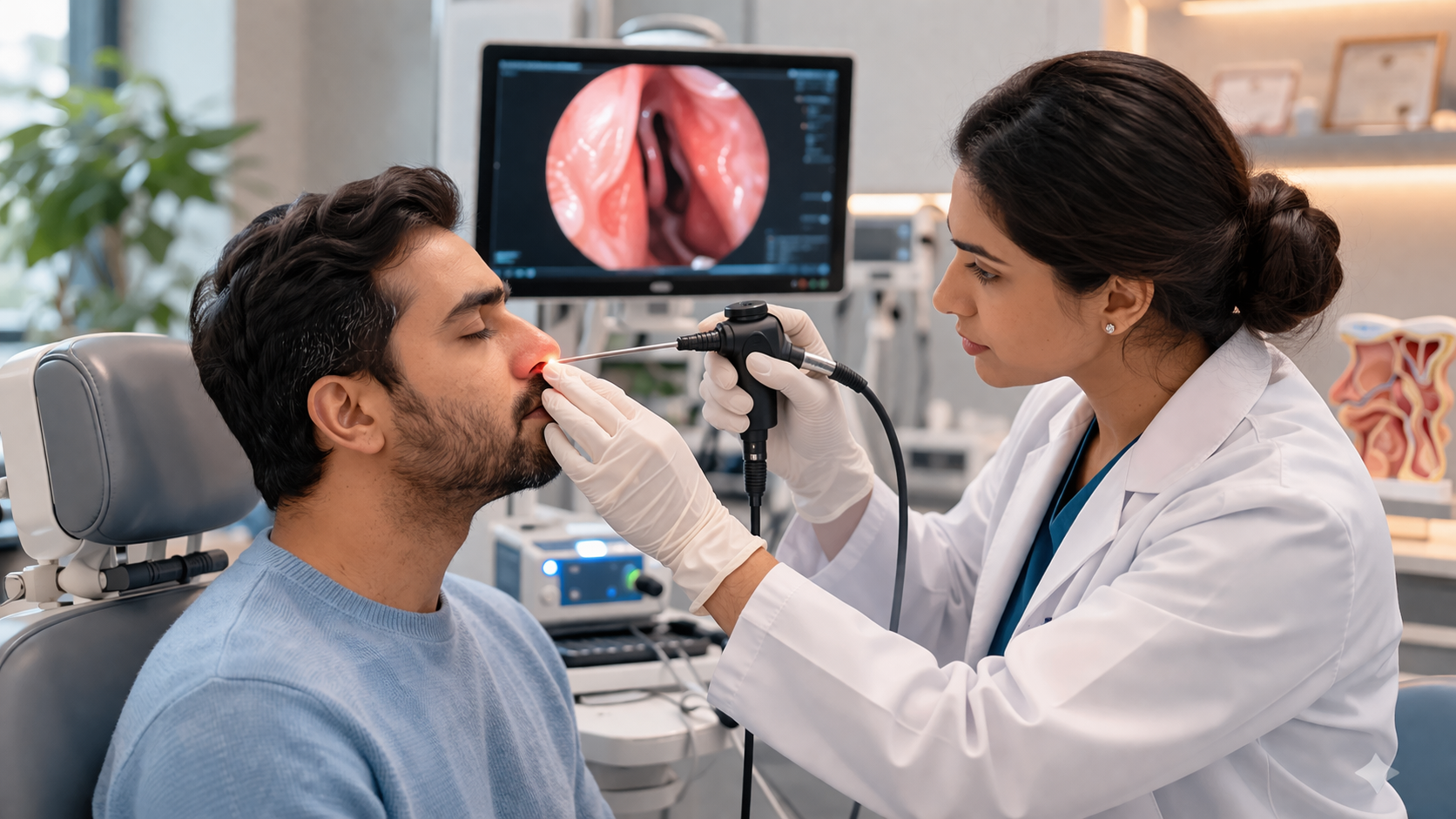
At Dr. Ram ENT Hospital, every diagnostic process begins with a detailed nasal endoscopy. This gives us a direct, clear view inside your nasal passages information that a basic physical examination simply cannot provide. Depending on the findings, a CT scan of the sinuses may follow, along with a full allergy evaluation where relevant. Together, these steps build a precise clinical picture so that we treat the actual cause not just the symptom.
| “Accurate diagnosis is the foundation of lasting relief. We never recommend treatment before we truly understand what is causing your blockage.” — Dr. Ram ENT Hospital, Ropar |
Treatment Options We Offer
Treatment at Dr. Ram ENT Hospital is built around your specific diagnosis — never a generic protocol. Depending on the underlying cause, we follow one of these evidence-based paths:
Medical Management
Nasal steroid sprays, antihistamines, saline irrigation, and targeted antibiotics for allergy-driven or infection-related cases. Many patients see significant improvement within 3–6 weeks.
Septoplasty
For deviated septum cases, this minimally invasive surgery corrects the nasal septum’s alignment, restores natural airflow, and delivers permanent relief with a short recovery period.
Turbinoplasty
When enlarged turbinates restrict breathing, this procedure reduces their size and effectively opens the nasal passage often performed alongside septoplasty.
FESS for Polyps & Sinusitis
Functional Endoscopic Sinus Surgery removes nasal polyps and clears blocked sinus drainage pathways through the nostrils no external cuts, lasting results.
For nasal polyps specifically, we first try steroid medications to shrink their size. However, when polyps are large or keep recurring, endoscopic surgery becomes the most effective and durable option. Surgery at our hospital uses advanced endoscopic guidance, so healthy nasal tissue stays completely untouched during the procedure.
Why Delayed Treatment Makes Things Worse
Untreated nasal blockage does not stay stable it tends to worsen gradually. Chronic obstruction during sleep reduces nighttime oxygen intake, disrupts restorative rest, and contributes to fatigue and poor concentration during the day. Furthermore, persistent sinus blockage creates the ideal environment for recurring bacterial infections, which then cause more inflammation and more blockage. This cycle is difficult to break without professional intervention.
In children, long-term mouth breathing from untreated nasal obstruction can affect facial development and speech. In adults, it significantly raises the risk of obstructive sleep apnoea a condition with serious cardiovascular implications over time. Early intervention breaks this cycle before complications develop.
Why Patients Choose Dr. Ram ENT Hospital
- Experienced ENT specialist with deep expertise in nasal and sinus conditions
- Advanced nasal endoscopy and diagnostic imaging available in-hospital
- Full spectrum of medical and surgical treatment options under one roof
- Minimally invasive surgical techniques with faster recovery times
- Personalised care plans your treatment is designed for your condition
Our focus has always been on finding the root cause and treating it properly, so patients do not find themselves cycling back through the same symptoms month after month.
| Ready to Breathe Freely Again? If you have been managing a blocked nose for weeks or months, do not settle for temporary fixes. Book a consultation with our ENT specialist in Ropar and take the first step toward real, lasting relief. Book Your Appointment: Dr. Ram ENT Hospital Call: 9815153761 | 9878217662 |
Frequently Asked Questions
Q: Can a deviated nasal septum cause blockage on both sides, or only one?
A deviated septum typically causes more prominent blockage on one side the side toward which the septum is displaced. However, the opposite side can also feel blocked due to compensatory enlargement of the turbinate on that side, a phenomenon known as turbinate hypertrophy. So many patients with a deviated septum experience alternating or bilateral congestion. A nasal endoscopy helps us assess both sides accurately before planning treatment.
Q: What is the difference between chronic sinusitis and nasal polyps can both be present at the same time?
Yes, they frequently occur together. Chronic sinusitis refers to long-term inflammation of the sinus lining, which impairs normal drainage and leads to persistent nasal congestion, pressure, and infection. Nasal polyps are soft, non-cancerous growths that form as a result of that ongoing inflammation. When polyps develop inside blocked sinuses, they worsen drainage even further and create a cycle that is difficult to break with medication alone. In such cases, endoscopic sinus surgery addresses both conditions simultaneously.
Q: Is septoplasty a major surgery? What does recovery look like?
Septoplasty is a well-established, minimally invasive procedure performed entirely through the nostrils there are no visible external cuts or changes to the shape of your nose. The surgery itself typically takes 45–90 minutes under general anaesthesia. Most patients are discharged the same day or the day after. Mild nasal swelling and some congestion are expected during the first 1–2 weeks, but most people return to light daily activities within 7–10 days. Full breathing improvement becomes noticeable within 4–6 weeks as swelling subsides.
Q: After successful nasal polyp surgery, how likely is it that polyps will come back?
Polyp recurrence depends largely on whether the underlying cause usually chronic inflammation, allergies or a specific immune response continues to go unmanaged. Endoscopic surgery removes the polyps and opens blocked sinus passages effectively, but without ongoing post-operative care, recurrence rates can be significant. At Dr. Ram ENT Hospital, we combine surgery with a long-term management plan that includes nasal steroid sprays, allergy treatment where applicable, and regular follow-up. This significantly reduces the chance of polyps returning.
Q: My nose has been blocked for years and I have adjusted to it. Do I still need treatment?
Many patients normalise their symptoms over time mouth breathing, snoring, and interrupted sleep become so routine that they stop noticing them. However, this long-term adaptation comes with real health consequences. Chronic nasal obstruction reduces nighttime oxygen intake, increases the risk of obstructive sleep apnoea, and promotes recurrent sinus infections. Furthermore, prolonged mouth breathing affects the quality of air reaching your lungs, since the nose normally filters, humidifies, and warms inhaled air. Getting a proper evaluation even years after symptoms began can lead to meaningful improvements in sleep, energy, and overall wellbeing.