





Children rarely explain their symptoms the way adults do. A four-year-old with a blocked ear does not say, “My hearing feels muffled on the left side.” Instead, he turns the television volume up, asks you to repeat yourself, or simply stops responding when you call him from another room. Parents then spend months assuming the child is distracted, stubborn, or going through a phase.
That gap between what a child feels and what a parent sees is exactly why so many ear, nose and throat problems get caught late. After examining children in clinic for years, I can tell you that most delayed cases were never medical mysteries. They were everyday symptoms that looked too ordinary to worry about.
This guide walks through the warning signs that genuinely deserve an appointment with an ENT Specialist for Children, and the ones you can safely watch at home for a few more days.
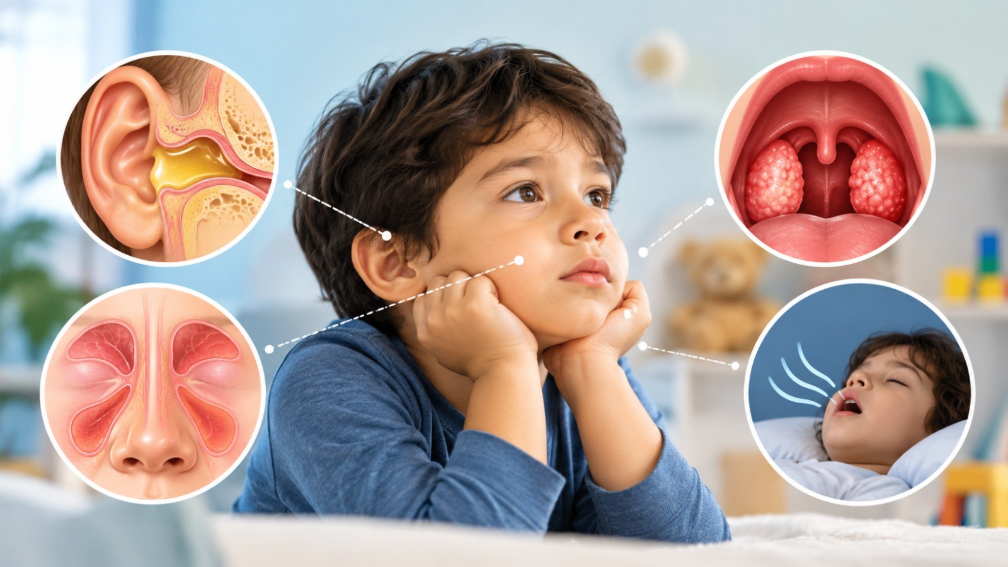
Why Children’s ENT Problems Are Not Simply Smaller Versions of Adult Problems
A child’s anatomy works against him in ways an adult’s does not. The eustachian tube, which drains the middle ear into the back of the nose, sits almost horizontally in young children. Fluid therefore collects easily and drains poorly. Adenoid tissue also peaks in size between ages three and seven, right when children start school and meet a fresh supply of infections every week.
Because of this combination, one cold in a five-year-old can produce three weeks of blocked ears, mouth breathing and restless sleep. The same cold in an adult clear in four days.
There is a second reason for early attention matter. The first six to eight years of life carry the heaviest load for speech, language and learning development. A child who hears at reduced volume during those years does not just hear less. He learns fewer words, mispronounces sounds he never heard clearly, and often struggles in class long after the original ear problem is resolved.
So, the real question is not whether symptoms are dangerous today. The question is whether it has been quietly interfering with hearing, breathing or sleeping for longer than it should have.
Ear Warning Signs Parents Should Never Dismiss
Ear complaints bring more children to ENT clinics than anything else. Some need nothing more than reassurance. Others need proper evaluation.
Book an appointment when you notice:
- Ear infections that keep returning roughly three or more episodes in six months, or four in a year. Repeated infections suggest a drainage problem, not bad luck.
- Fluid behind the eardrum that lingers after the pain and fever settle. This “glue ear” causes no pain at all, which is precisely why families miss it.
- Discharge from the ear, especially if it smells unpleasant, appears repeatedly, or continues beyond a few days.
- A child who does not respond consistently to normal speech, sits close to the screen, or watches your face intently while you talk.
- Balance problems or unexplained clumsiness, since the inner ear governs balance as well as hearing.
- Complaints of ringing or buzzing in older children who can describe it.
Please never insert cotton buds, oil or ear drops bought over the counter before someone examines the eardrum. A perforated eardrum changes the treatment completely, and drops meant for an intact ear can cause harm.
Nose and Breathing Signs That Point Toward an ENT Evaluation
Watch how your child breathes while he sleeps. That single observation reveals more than most parents expect.
Persistent mouth breathing deserves attention, particularly when it continues for weeks without a cold. Children breathe through the nose by design, and the nose warms, filters and humidifies air before it reaches the lungs. When enlarged adenoids or chronic nasal blockage force the mouth open instead, sleep quality drops and facial growth can change subtly over the years.
Other nasal signs worth investigating include a runny nose that never fully clears, frequent nosebleeds, constant sniffing or throat clearing, a nasal-sounding voice, and repeated sinus infections. Allergy also plays a large role across North India, where dust, seasonal pollen, construction and winter air quality keep young noses inflamed for months at a time.
Throat, Tonsil and Adenoid Symptoms
Tonsils enlarge naturally in childhood, so size alone rarely worries me. Function matters far more.
Consider an evaluation if your child has frequented painful throat infections requiring antibiotics several times a year, difficulty swallowing solid food, a muffled voice, persistent bad breath despite good brushing, or visible pauses in breathing during sleep.
Snoring deserves a special mention. Occasional snoring during a cold is normal. Loud snoring most nights, combined with gasping, restlessness or unusual sleeping positions, may indicate obstructive sleep apnoea. Children with this condition often appear hyperactive and irritable rather than sleepy, which is why teachers sometimes flag behaviour long before anyone suspects a breathing problem.
Speech and Hearing Milestones Worth Tracking
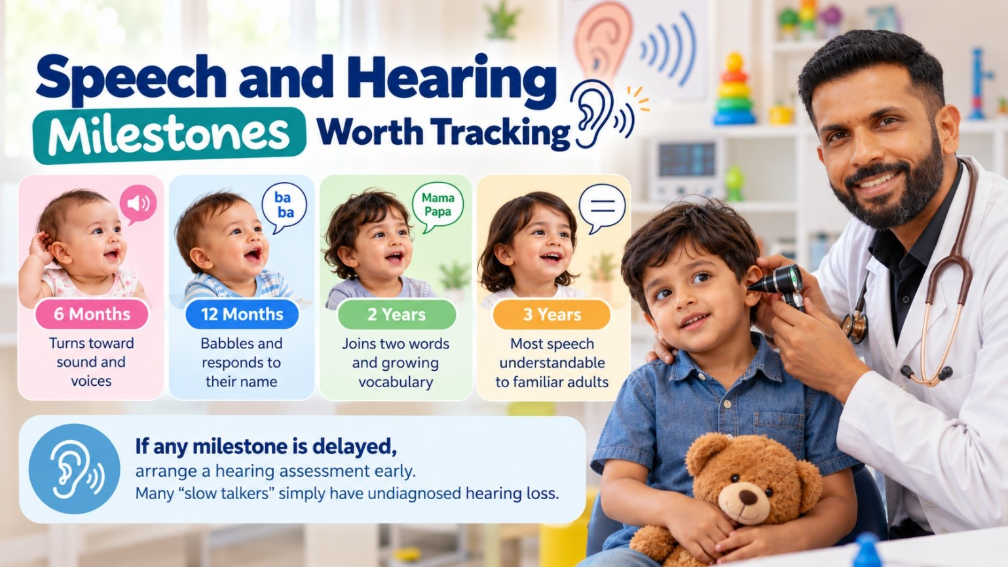
Milestones offer the clearest early warning system available to parents. Trust your instinct when something feels delayed.
By six months, babies usually turn toward sound and voices. By twelve months, most babble with varied consonants and respond to their own name. By two years, a child typically joins two words and uses a growing vocabulary. By three years, familiar adults should understand most of what he says.
When any of these milestones slip, arrange a hearing assessment before starting speech therapy alone. Many children labelled as “slow talkers” simply had undiagnosed hearing loss from fluid in the middle ear. Once hearing improves, speech usually follows quickly.
Families across Ropar, Rupnagar, Mohali, Kharar and the wider tricity region often search for a good ENT near Chandigarh precisely at this stage, after a teacher or paediatrician raises a concern. Bringing your child to a Child ENT Specialist in Punjab early gives you a proper hearing test, a clear diagnosis and a plan, rather than another six months of waiting. The Best ENT Hospital Ropar near Chandigarh for your family will be the one that tests hearing objectively instead of guessing from symptoms alone, and many parents specifically look for an ENT Specialist Near Chandigarh who comfortable examining nervous toddlers without distress is.
What Actually Happens During a Paediatric ENT Visit
Parents often worry that the examination itself will frighten the child. In practice, routine consultation is gentle and quick.
The visit usually begins with a detailed history. Expect questions about infection frequency, sleep, snoring, school performance, feeding and allergy patterns. Next comes examination of the ears, nose and throat, often with a small endoscope for a clearer view. Tympanometry checks middle ear pressure painlessly in seconds, while audiometry or age-appropriate hearing tests measure actual hearing levels.
Treatment then follows the diagnosis rather than the calendar. Many children need nothing beyond nasal hygiene, allergy control and observation. Some need a short course of medication. A smaller group benefits from procedures such as grommet insertion for persistent glue ear, adenoidectomy for obstructed breathing, or tonsillectomy for repeated infections. Surgery is never the starting point, and any good doctor will explain why a procedure is necessary before recommending it.
Symptoms That Need Same-Day Attention
Most ENT concerns can wait for a scheduled appointment. A few cannot.
Seek immediate care for noisy or laboured breathing with chest retractions, a child who drools and refuses to swallow, sudden hearing loss in one ear, severe ear pain with high fever, swelling or redness behind the ear that pushes it forward, a nosebleed that does not stop after ten minutes of firm pressure, or any suspicion that a foreign object has entered the ear, nose or airway.
A Practical Rule for Busy Parents

If you remember nothing else, remember this: any ENT symptom that keeps returning, lasts longer than expected, or affects hearing, breathing, sleep or speech deserves a professional opinion. One ear infection is an event. Four in a year is a pattern, and patterns need investigation.
Early evaluation rarely leads to dramatic intervention. Far more often, it produces a clear explanation, a simple plan and one less thing to worry about at two in the morning.
At Dr. Ram ENT Hospital in Ropar, our paediatric ENT care focuses on accurate diagnosis first, with hearing assessment, endoscopic examination and allergy evaluation available under one roof for children of every age group. Families travelling from Rupnagar, Kharar, Kurali, Mohali near Chandigarh find the practical difference lies in unhurried consultations and honest advice about when treatment genuinely helps. To discuss your child’s symptoms with the team at Dr. Ram ENT Hospital or call the hospital to book a consultation.
Frequently Asked Questions
1. My child passed the newborn hearing screening. Can hearing loss still develop later?
Yes, and this surprises many parents. Newborn screening detects hearing loss present at birth, but it cannot predict the future. Acquired hearing loss develops later from recurrent middle ear infections, persistent fluid, meningitis, certain medications, head injury or progressive genetic conditions. Therefore, a normal newborn screen should never override current concerns about your child’s responses to sound.
2. How long should fluid stay behind the eardrum before treatment becomes necessary?
Fluid frequently clears on its own within four to six weeks after an infection. Hospital generally observe for around three months, provided hearing remains adequate and speech develops normally. However, when fluid persists beyond that window in both ears, or when hearing tests show meaningful loss, grommet insertion becomes a reasonable option because language development cannot simply pause while everyone waits.
3. Are enlarged tonsils and enlarged adenoids the same problem?
They belong to the same ring of immune tissue, yet they cause different symptoms. Adenoids sit behind the nose, so enlargement produces mouth breathing, nasal speech and blocked ears. Tonsils sit in the throat, so enlargement causes swallowing difficulty and recurrent throat infections. A child may have one problem, both, or neither, which is why endoscopic examination matters more than a torch-and-tongue-depressor look.
4. Will my child grow snoring without any treatment?
Some children do, particularly when snoring follows a cold or a passing allergy flare. Still, habitual snoring on most nights of the week is not something to wait for indefinitely. When snoring comes with breathing pauses, gasping, bedwetting after previous dryness, morning headaches or daytime irritability, an evaluation for obstructive sleep apnoea is appropriate rather than optional.
5. Does frequent antibiotic use prevent repeated ear infections in children?
No, and this approach often backfires. Repeated antibiotic courses treat individual episodes without addressing the underlying drainage or allergy problem driving them, while also encouraging resistance. A better strategy identifies the root cause through examination and hearing tests, then manages allergy, nasal obstruction or adenoid enlargement directly. Consequently, many children need fewer antibiotics after proper ENT assessment, not more.