




Snoring may sound like a small night-time problem, but for many families in Chandigarh, Mohali, Panchkula, Kharar, Kurali and Ropar, it slowly becomes a daily health and relationship concern. A partner loses sleep, the snorer wakes up tired, and the family often assumes it is only a habit. In reality, regular snoring can happen when airflow is blocked in the nose or throat during sleep.
If you have searched for snoring treatment near me while living in Chandigarh, Tri-City or near Ropar, the first step is not buying a random anti-snoring device. The right approach is to understand why you snore, check whether sleep apnea is involved, and choose an ENT or sleep specialist who can match the treatment to your exact airway problem.
This guide explains the common causes of snoring, warning signs that need medical attention, available treatment options, and how patients from Chandigarh, Tri-City and nearby Ropar can choose practical, long-term care. It is educational content and should not replace a personal medical consultation.
| Quick Answer: The right snoring treatment near Chandigarh, Tri-City and Ropar depends on the cause. Mild snoring may improve with weight control, side sleeping, nasal allergy care and better sleep habits. Loud snoring with choking, breathing pauses or daytime sleepiness needs an ENT evaluation and, in many cases, a sleep study to rule out obstructive sleep apnea. |
Why Do People Snore?
Snoring happens when air cannot move freely through the nose, mouth or throat while a person is asleep. As air passes through a narrowed airway, relaxed tissues vibrate and create the familiar sound. The noise may come from the nose, soft palate, tonsils, tongue base or a combination of areas.
For patients in this region, common triggers include seasonal allergies, dust exposure, sinus problems, deviated nasal septum, enlarged tonsils, weight gain, smoking, alcohol before sleep and sleeping flat on the back. Because the cause is different for every patient, the same treatment cannot work for everyone.
A person with nasal blockage may need allergy treatment, sinus care or correction of a deviated septum. Another person may snore because the tongue falls backward during sleep. Someone else may have enlarged tonsils, a long soft palate or sleep apnea. A proper airway examination helps identify the real reason before treatment starts.
When Is Snoring More Than Just a Sound?
Occasional light snoring during a cold or after a tiring day is usually not a major concern. However, frequent loud snoring can be a sign of obstructive sleep apnea, also called OSA. In this condition, breathing repeatedly slows or stops during sleep because the airway becomes blocked.
You should consult an ENT or sleep specialist if snoring is followed by choking, gasping or silent pauses. Other warning signs include morning headaches, dry mouth, daytime sleepiness, poor concentration, irritability, high blood pressure or a partner noticing that you stop breathing during sleep.
Many people around Chandigarh, Tri-City and Ropar ignore these symptoms for years because they adjust to feeling tired. But poor sleep quality affects work performance, driving safety, mood and overall health. Early evaluation can help detect whether the problem is simple snoring, nasal obstruction or sleep apnea.
Common Causes Seen in Chandigarh, Tri-City and Near Ropar Patients
The Chandigarh and Ropar belt has a mix of urban pollution, seasonal pollen, dust exposure, changing weather and busy work routines. These factors can worsen nasal congestion and mouth breathing at night. People who travel daily between Ropar, Mohali, Chandigarh or Panchkula may also delay medical care because snoring does not feel urgent.
The most common snoring-related causes include blocked nose, chronic sinusitis, allergic rhinitis, deviated septum, enlarged turbinates, enlarged tonsils or adenoids, weight around the neck, alcohol use, smoking, poor sleep routine and sleeping on the back.
Children who snore regularly should also be evaluated. In children, repeated snoring, mouth breathing, restless sleep or poor school focus may be linked to enlarged tonsils or adenoids. Early ENT assessment can help parents understand whether treatment is needed.
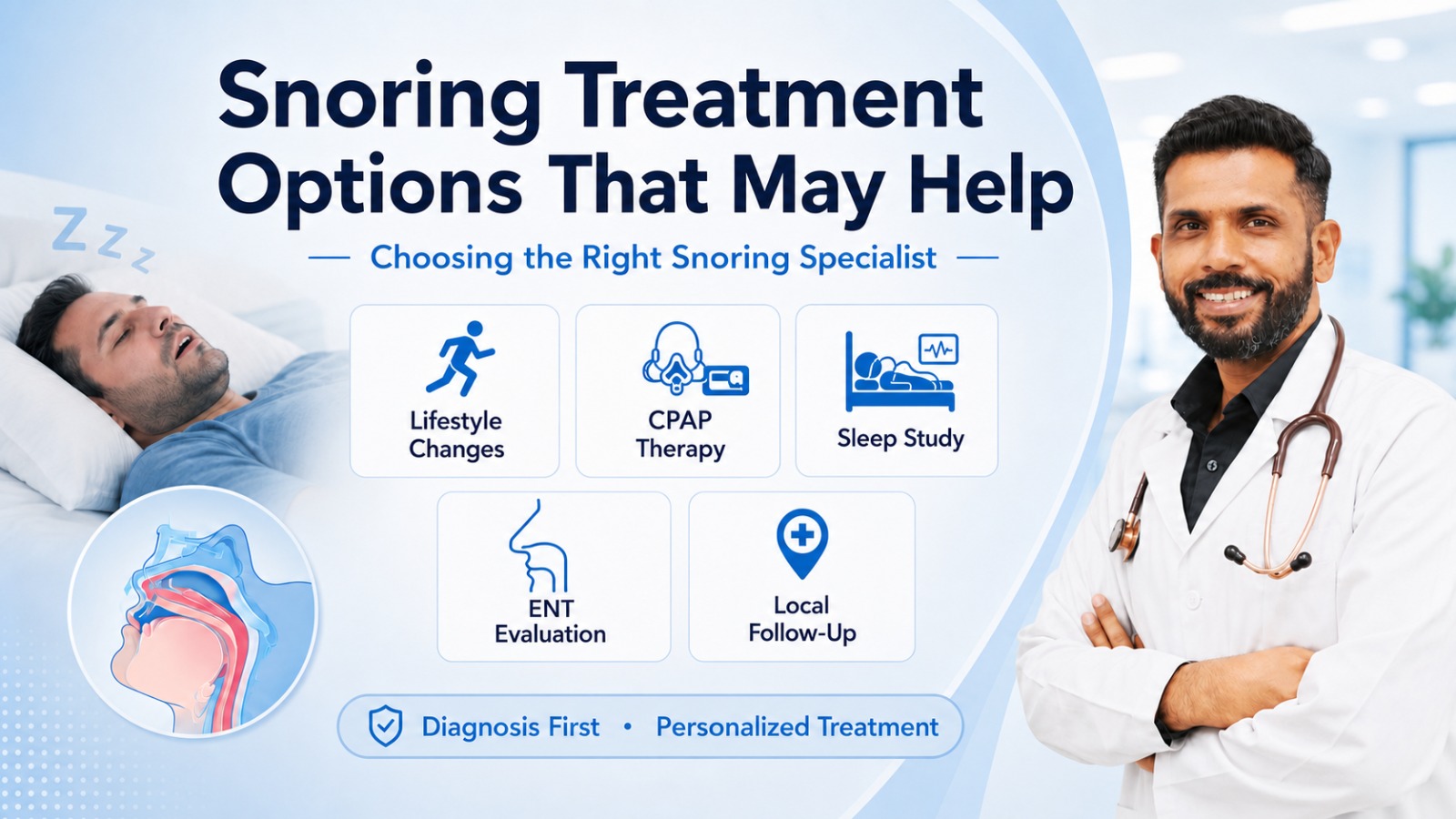
Snoring Treatment Options That May Help
There is no single permanent solution for every snorer. Treatment depends on the diagnosis, the severity of symptoms and whether sleep apnea is present. A responsible specialist will usually begin with the least invasive option that can work for your condition.
Lifestyle and sleep-position changes may help mild snoring. These include weight management, sleeping on the side, avoiding alcohol close to bedtime, maintaining a consistent sleep schedule, quitting smoking and treating nasal allergy or congestion. These steps are simple but can make a noticeable difference when snoring is mild or position-related.
Medical devices may be recommended when lifestyle changes are not enough. CPAP therapy keeps the airway open with gentle air pressure and is commonly used for moderate to severe sleep apnea. Custom oral appliances may help selected mild to moderate cases by moving the lower jaw forward. Nasal strips or dilators may help some people with nasal airflow issues, but they do not treat sleep apnea.
ENT procedures may be considered when a structural blockage is found. Depending on the case, this may include septoplasty for a deviated septum, turbinate reduction for swollen nasal tissues, tonsil or adenoid removal, sinus surgery or palate procedures. Surgery should be recommended only after a detailed examination and clear explanation of benefits, limits and recovery.
How to Choose the Right Snoring Specialist Near Chandigarh, Tri-City and Ropar
When you search online for snoring treatment near me, you may see many clinics, hospitals and device providers. The better choice is usually a specialist who diagnoses the airway first instead of directly selling one device or procedure.
Look for an ENT specialist with experience in snoring, nasal obstruction and sleep-disordered breathing. Snoring commonly begins in the nose or throat, so an ENT evaluation can identify whether the problem is due to the nasal passage, tonsils, soft palate, tongue position or a combination.
Ask whether the clinic provides proper diagnosis before treatment. A good evaluation may include sleep history, partner observations, nasal endoscopy and a sleep study if apnea is suspected. This approach is especially useful for patients travelling from Chandigarh, Mohali, Panchkula, Kharar, Kurali, Morinda or Ropar because it reduces unnecessary repeat visits.
Also check whether the doctor explains all suitable options, including lifestyle changes, medical management, CPAP support, oral appliance guidance and surgical care when required. A clinic with balanced guidance can recommend what fits your condition rather than forcing one solution on every patient.
Why Local Follow-Up Matters
Long-term snoring relief often needs follow-up. CPAP settings may need adjustment, allergy treatment may need monitoring, and surgical patients need review visits during recovery. For families near Ropar, choosing care close to Chandigarh and Tri-City can make follow-up more practical than travelling far for every appointment.
Local access is also helpful when symptoms change. If snoring improves but daytime sleepiness continues, or if a child continues mouth breathing after medication, timely review helps the doctor adjust the plan. Snoring care is not only about stopping sound; it is about restoring healthy breathing and better sleep.

What to Expect During Your First Visit
During the first consultation, the doctor will ask about snoring frequency, sleep position, choking episodes, morning symptoms, daytime tiredness, lifestyle habits and existing health conditions. If possible, bring details from your sleep partner because they may notice breathing pauses that you do not remember.
The ENT examination may include checking the nose, throat, tonsils, tongue position and palate. A nasal endoscopy may be advised to see the inside of the nose and airway more clearly. If symptoms suggest sleep apnea, the doctor may recommend a home or lab-based sleep study to measure breathing and oxygen levels during sleep.
After diagnosis, you should receive a personalized treatment plan. This may be as simple as treating allergies and changing sleep position, or it may involve CPAP, an oral appliance, or a focused ENT procedure. The goal is to treat the actual cause, not just reduce the noise temporarily.
Why Choose Dr. Ram ENT Hospital for Snoring Evaluation Near Ropar?
For patients looking for snoring treatment near Chandigarh, Tri-City and Ropar, Dr. Ram ENT Hospital offers ENT-focused evaluation for snoring, nasal blockage, throat-related breathing issues and suspected sleep apnea. The advantage of seeing an ENT specialist is that both nasal and throat causes can be assessed in one place.
Patients from Ropar, Rupnagar, Kurali, Morinda, Kharar, Mohali, Panchkula and Chandigarh can benefit from a diagnosis-first approach. Instead of depending on over-the-counter sprays, pillows or online devices, a proper examination helps identify whether the problem is nasal obstruction, tonsils, soft palate vibration, tongue-base collapse or sleep apnea.
The right treatment may be lifestyle guidance, medicine for nasal allergy, a sleep study, CPAP support, or an ENT procedure when needed. Honest guidance matters because not every snorer needs surgery, and not every patient can rely on home remedies.
Conclusion: Start with Diagnosis, Then Choose Treatment
Snoring is common, but regular loud snoring should not be ignored. It can disturb sleep, affect family life and sometimes indicate sleep apnea. The safest path is to understand the cause first and then choose the treatment that matches your airway and symptoms.
If you live in Chandigarh, Tri-City or near Ropar and are searching for reliable snoring treatment near me, book an ENT and sleep-related evaluation rather than delaying care. One timely consultation can help you understand the reason behind snoring and take the right step toward quieter, healthier sleep.
Frequently Asked Questions
1. What is the best snoring treatment near Chandigarh and Ropar?
The best treatment depends on the cause. Nasal blockage, throat relaxation, weight gain, enlarged tonsils and sleep apnea need different approaches. An ENT evaluation helps decide whether lifestyle changes, medicines, CPAP, an oral appliance or a procedure is suitable.
2. Should I see an ENT doctor or a sleep doctor for snoring?
An ENT doctor is a good starting point because snoring usually involves the nose, throat or airway structure. If sleep apnea is suspected, the ENT may advise a sleep study and coordinate treatment based on the report.
3. Is snoring always caused by sleep apnea?
No. Many people snore without sleep apnea. However, loud snoring with breathing pauses, gasping, choking, morning headache or daytime sleepiness should be checked because these symptoms may point toward obstructive sleep apnea.
4. Can snoring be treated without surgery?
Yes. Many patients improve with weight control, side sleeping, allergy treatment, nasal care, CPAP or oral appliances. Surgery is usually considered only when a clear structural blockage is found and other suitable options are not enough.
5. Do anti-snoring sprays, strips and pillows really work?
They may help mild snoring caused by nasal congestion or sleeping position. They are not reliable for moderate to severe snoring or sleep apnea. If symptoms are frequent, it is better to get a proper diagnosis instead of depending only on temporary fixes.
6. When should children near Ropar or Chandigarh be checked for snoring?
Children should be evaluated if they snore regularly, breathe through the mouth, sleep restlessly, wake tired, or have poor concentration. Enlarged tonsils and adenoids are common causes and can be assessed by an ENT specialist.
7. How soon can snoring improve after treatment?
Improvement depends on the cause. Allergy or nasal congestion treatment may help within days or weeks. CPAP may improve sleep quickly when used correctly. Surgical recovery and results vary depending on the procedure and the patient.